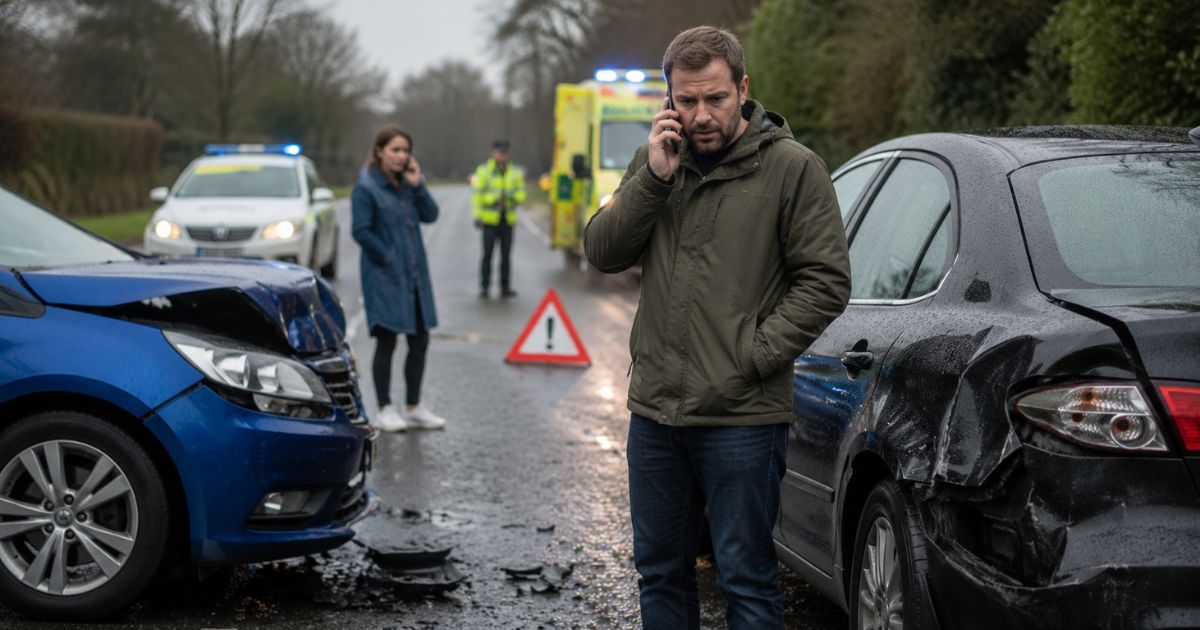
The moment you sustain a serious injury in a car accident, collecting evidence seems impossible when you are lying in a hospital bed. You cannot use your phone. You do not have your glasses with you. You are not able to take pictures and write down the details of the accident.
Fortunately, being too injured to collect evidence does not mean you are unable to pursue compensation. In the UK, there is plenty of other evidence that can protect you.
Emergency services document everything about the accident. Medical records provide proof of your injuries. Video footage and witnesses complete the picture.
This guide will explain to you how exactly your rights are protected when you are unable to gather evidence. You will learn about legal time limits, hit-and-run situations, uninsured drivers, credit hire agreements, and how to choose someone to file your claim.
If you want to learn whether you qualify for compensation, contact an auto accident claims advisor or continue reading to find out how your rights are secured in such situations.
Who Is This Guide For?
This guide is for the UK drivers, passengers, cyclists, and pedestrians who have been seriously injured in a road traffic accident.
But if you can’t:
Take pictures of the accident site
Record the license number of the other car
Speak with witnesses to the accident
File an accident report with the police or your insurance company in hours
This manual is for you. The information provided in this article applies to England and Wales only. There are some differences in Scotland and Northern Ireland, which I will mention when needed.
Also read:- Aeonscope Gaming: Exploring the Future of Video Gaming and Tech Innovation
The Legal Time Limits You Cannot Afford to Miss
Before we talk about evidence, let us cover deadlines. Missing these can lose your right to claim forever.
| Deadline | Time Limit | What You Need to Do |
| Report the accident to the police | Within 24 hours | If you cannot, a family member can report for you |
| Tell your insurer | Within 48 hours (check your policy) | Most policies require this, even if you do not claim |
| Start a personal injury claim | 3 years from the accident date | For adults in England and Wales |
| Claim for a child | 3 years from their 18th birthday | A parent can claim earlier |
| Request CCTV footage | Within 14-31 days | Footage is often overwritten after this window |
If you are too injured to meet these deadlines, do not panic. Police can backdate reports with valid medical reasons. Insurers are usually understanding if you are hospitalised. But act as soon as you can, or ask a family member to help.
Important: The 3-year time limit for personal injury claims in England and Wales is strict. There are very few exceptions. Do not wait until you are fully recovered to start the process.
Evidence That Is Not Necessary for You to Gather
When you can’t gather evidence yourself, you have to rely on other sources. Here is what can help you.
Emergency Services Document Everything
Police and paramedics are trained to document car crashes. These documents will serve as your evidence.
Police reports contain:
Position of the cars and extent of damage
Conditions of the road and weather
Information about the drivers and their statements
Statements of any witnesses they managed to interview
Paramedic and ambulance reports contain:
Your state of injury at the scene
Immediate treatment you received
Your condition upon arriving at the hospital
These reports are very reliable sources of evidence in the eyes of both insurers and the courts. You don’t have to gather anything.
Your Medical Records Prove Your Injuries
Your hospital records will be your best evidence. They are hard to dispute.
Here is what to ask your hospital to provide:
Notes of paramedics and ambulance services
A&E and trauma admission records
X-rays, CTs, MRIs
Surgery records
Discharge summaries
Records of follow-up appointments
You should also keep a recovery journal. It is important to write down your feelings every day. You should note that you couldn’t sleep, needed help getting dressed or taking a shower, etc. It will demonstrate the impact of your injuries.
Witnesses Who Were There
Even if you cannot talk to any witnesses, they may have talked to the police or left their contact details with someone at the scene.
Finding witnesses:
Check the police report for witness statements
Get your solicitor to make an appeal on social media
Search for Facebook groups in the area where the collision took place
Witness memories fade fast. Try to get witnesses before the first couple of weeks are up.
What If the Other Driver Fled? (Hit-and-Run)
It happens far more frequently than you might think. Don’t panic!
You still have rights. You should inform the police about the collision. Provide as much information as you have – partial registration number, make of the car, its colour, and direction of travel.
The police can use ANPR cameras. Even with little information, they can track down the driver.
Your claim will go ahead. In case the driver cannot be traced, you will be able to claim through the Motor Insurers’ Bureau (MIB). The MIB specializes in hit-and-run cases.
Also read: Type Of FOK959S-M Model
What If the Other Driver Is Not Insured?
This is yet another worry many people have. Do not panic here as well.
The Motor Insurers’ Bureau (MIB) is funded by insurance firms. It compensates victims of uninsured and untraced motorists.
Important MIB regulations to note:
You get 3 years to claim (same as usual)
In case the driver is untraced, report to MIB within 14 days after the accident
The MIB will deduct £300 from your compensation in case of uninsured motorists’ claims
Do not think that there is nothing you can do. You can visit the MIB website or ask your lawyer to make the claim for you.
Warning on Credit Hire Vehicles: Read this before accepting a replacement car
When you’ve been in an accident, you might be offered a replacement car. That seems like a good idea. However, some of these offers are credit hire vehicles that come with a potential risk.
What is credit hire? The hirer provides you with a replacement car and then charges the other insurer. Daily rates could range from £150 to £400, which is 3 to 5 times more than usual.
What is the risk? In case the other insurer rejects paying such high rates, the hirer can demand compensation from you for the difference. I have witnessed drivers receiving letters for £5,000 to £10,000 several months after their case was settled.
What should you do before accepting any vehicle?
Ask: “Is this a credit hire agreement or a courtesy car?”
Ask the daily rate in writing
Compare it to usual rental rates (they should be around the same price, not 3 to 5 times higher)
Find out what will happen if the other insurer rejects payment
Make sure all information is documented before taking the car
A safer choice: Request your insurer to provide you with a courtesy car.
No Win No Fee Explained (Without the Jargon)
Many solicitors offer No Win No Fee agreements. Here is how they actually work.
If you lose the case: You pay nothing. That is the “no-win” part.
If you win the case: The solicitor takes a percentage of your compensation. That is the “no fee” part, but there is still a fee.
What the solicitor typically takes:
- Success fee: up to 25% of your compensation
- Plus VAT at 20% on that fee
Example: You win £10,000. The solicitor’s success fee is 25% = £2,500. VAT at 20% on £2,500 = £500. Total deduction = £3,000. You receive roughly £7,000.
What is included: Most agreements cover the solicitor’s work. You may still need to pay for medical reports or court fees upfront (these are usually refunded if you win).
Always ask before signing:
- What percentage do you take?
- Is VAT included or extra?
- What costs am I responsible for if I lose?
- Can I cancel within 14 days? (You have this right under consumer law)
Also read: Who Is Cole Young in Mortal Kombat?
How to Pick Your Solicitor or Claims Management Firm
Not all providers will be equal. Some firms are great. Some are not. Here’s how to tell them apart.
What to check:
- Financial Conduct Authority (FCA) authorization (claims management firms) or Solicitors Regulation Authority (SRA) registration (solicitors)
- Consistently good reviews on Trustpilot or Google (check recent reviews, not just the average score)
- Written fee agreement before signing anything
- Specific person assigned to your claim (not just someone from the call center)
- Published complaints procedure and access to the Legal Ombudsman
Warning signs to avoid:
- Contact by cold call or text about your accident (since 2019, such actions have been made illegal)
- Promise of “guaranteed” compensation (there is no guarantee)
- Pressure to sign on the spot
- Unwillingness to provide clear information about fees
- No website or only perfect reviews (no one is perfect)
Good places to find providers:
- “Find a Solicitor” service of The Law Society
- Association of Personal Injury Lawyers (APIL)
- Trustpilot – look for firms that have 4 stars or more and many reviews
What Happens if the Other Driver Is Partially At-Fault?
Not all accidents are caused completely by one party. You may have been speeding slightly. Or you may not have seen the other driver in time.
Great! You can still file a claim. You will just receive less money based on your share of fault.
| Your Fault | Compensation Reduction | Example (£10,000 claim) |
| 0% (non-fault) | 0% reduction | £10,000 |
| 10% at fault | 10% reduction | £9,000 |
| 25% at fault | 25% reduction | £7,500 |
| 50% at fault | 50% reduction | £5,000 |
| 75% at fault | 75% reduction | £2,500 |
Fault determination process: police report, dashcam video, witness testimonies, CCTV recordings, and the Highway Code.
Important advice: Do not apologize in any way. Any apology can be considered an admission of liability. Swap information. Stay calm. Let the facts speak for themselves.
What Else Are You Entitled To?
The compensation you are entitled to may cover more than pain and suffering. Below is an exhaustive list.
General damages (pain and suffering):
- Physical pain resulting from injuries sustained
- Mental distress (anxiety, depression, post-traumatic stress disorder)
- Loss of ability to enjoy life
Special damages (losses):
- Income loss (past and future)
- Medical bills (prescriptions, physiotherapy, private medical treatment)
- Travel expenses (hospital and GP visits)
- Care expenses (care provided by relatives or hired personnel)
- Adaptations required for the home following severe injuries
- Costs for repairing or replacing your vehicle
Keep every receipt. Every prescription. Every trip to the hospital by taxi. Even every hour taken off work by your relative to take care of you. Everything counts.
Mental Health and Emotional Healing
Accidents not only affect your body but also your mind. Depression, anxiety, and PTSD are frequent occurrences following such incidents.
Signs of mental distress:
Insomnia or nightmares
Reliving the incident in your mind
Avoiding cars/roads
Getting easily startled or on edge
Not interested in activities once enjoyed
Where to find support:
GP referral to a counsellor or prescription of drugs
Counselling is also offered privately (keep receipts for reclaimable costs)
RoadPeace is an example of a support group (for accident victims specifically)
NHS talking therapies (free, self-referral online)
Please do not overlook your mental well-being. It is just as important as physical healing. Moreover, compensation is also possible for psychological trauma.
Quick Action Plan (When You Are Unable To Act On Your Own)
If you are currently lying in a hospital bed unable to move around, here is what you need to be aware of.
| Priority | Action | Who Can Do It |
| 1 | Get medical treatment | Doctors and nurses (already happening) |
| 2 | Ask someone to report the accident to the police | Family member or friend |
| 3 | Ask someone to tell your insurer | Family member or friend (give them your policy number) |
| 4 | Keep all medical records and receipts | You or a family member |
| 5 | Do not sign anything without legal advice | You (wait until you understand) |
| 6 | Find a solicitor or claims company before 3 years pass | You or a family member |
You don’t have to do anything on your own. Ask for assistance. That is why there are family and friends.
Final Thoughts
Getting too hurt to gather evidence following an accident can be scary. However, your rights remain protected. This is because police reports, medical files, CCTV footage, and eyewitnesses will take care of everything.
There are legal deadlines, but there is room for leniency if you are in the hospital. Hit-and-runs and uninsured motorists are taken care of by the MIB.
Let nothing like the fear of credit hire or the complications surrounding No Win No Fee arrangements stand in your way of filing a claim. Be inquisitive. Understand what you are signing. Choose a reputable service provider.
Speak to a reputable auto claims company about your eligibility for compensation today.