I’ve seen this happen more times than I can count. A landlord lets a property sit vacant for three months. No inspections. No heating turned on. No security checks.
Then one day, they get a phone call from a neighbour. “There is a van parked at your place. People are bringing furniture inside.”
Squatters. £30,000 in legal bills. Eight months to evict them.
Another time, a landlord turns off the heat in December. A pipe freezes. It bursts. The water runs for two weeks before anyone notices. Three floors ruined. £45,000 in damage. The insurance won’t cover anything because the property was vacant for over 60 days.
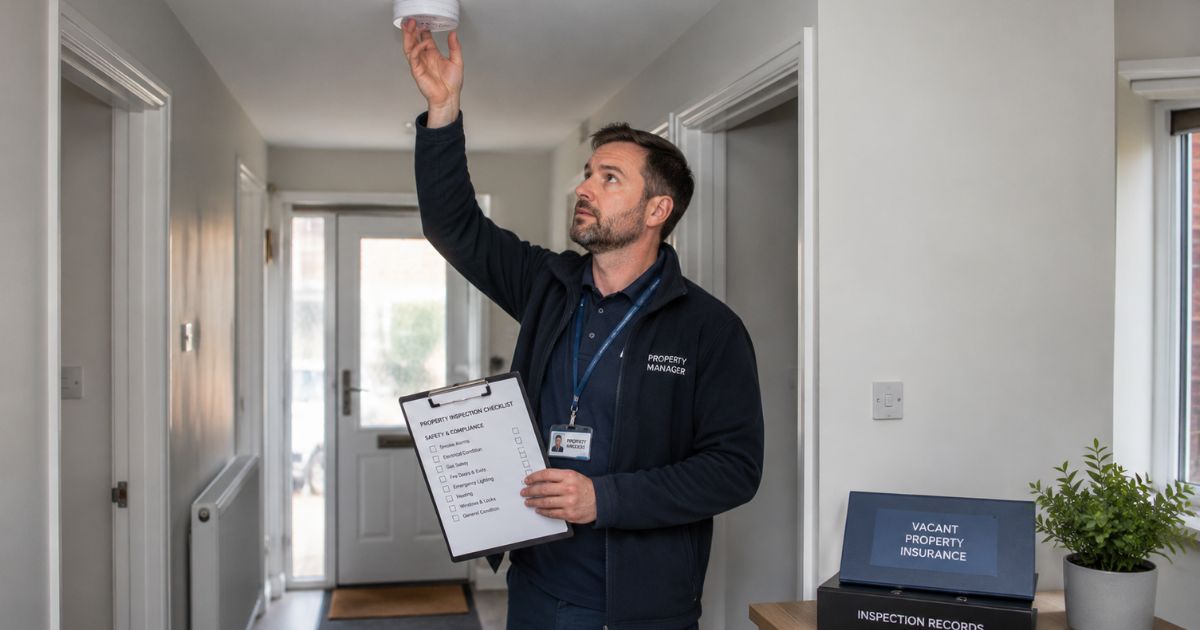
Vacant property management simply means having an easy method of protecting your vacant property. Inspections. Security checks. Keeping your insurance current.
This guide is for any landlord who owns an empty property in the United Kingdom. This guide will give you a clear picture of the dangers involved, the legal requirements, and how to take action without breaking the bank.
Free vacant property assessment and quote or continue reading to find out why a vacant property needs more protection than an occupied one.
Who Really Needs To Read This Guide?
You will have to read this guide if you can identify yourself in any of the following situations:
- Your rental property is vacant for more than 30 days
- You have inherited a house and do not know what to do with it
- You have a commercial building which does not have any tenants currently
- Your property is being renovated and will remain so for months
Take the time out to go through it properly. The consequences might be graver than you think.
The Law Still Applies Even When Nobody Lives There
Many landlords mistakenly believe owning an unoccupied property means owning no liabilities. This is not the case.
Someone is injured on your land. You can still be sued.
Occupiers’ Liability Act 1957 stipulates that you have a duty of care towards all entrants onto your property, including trespassers.
A teenage boy enters your property illegally, climbs your fence, slips through the rotten floor and ends up paralyzed. You pay.
These types of cases usually cost from £20,000 to £100,000 each.
Your council will charge you the council tax.
It is widely believed that unoccupied properties receive discounts or exemptions when it comes to taxes. Some indeed do. But only temporarily. After one year, most councils charge 100% extra. You pay twice as much. What about five years? Up to 300%. Four times the normal rate.
Look up your local council website. Don’t assume you are exempt.
Some councils ask you to register unoccupied properties.
Some local authorities actually require registering unoccupied properties within 28 days of becoming such. Failure to do so will result in fines of £500 – £5,000.
Unoccupied commercial properties have more stringent fire safety requirements.
Even if your commercial building is unoccupied, you must have functional fire alarms and emergency lighting installed. The “It is empty, therefore, it does not matter” approach is not acceptable.
Also read:- Aeonscope Gaming: Exploring the Future of Video Gaming and Tech Innovation
Squatters: The Nightmare Nobody Prepares For
Squatters hunt for empty houses. Unlocked windows, flimsy doors, unkempt gardens. Signs that say “no one is looking.”
How bad can things become?
I know of a landlord who had their property taken away from them. The squatters stayed there for 12 years. They claimed adverse possession. Legally, it made them the owner. Rare but possible.
The cost of getting them out.
You cannot simply change the locks. You need a court order. It takes three to twelve months. The legal costs are from £10,000 to £30,000. Insurance won’t cover it.
What really works.
Make weekly inspections. Install security systems. Block up any broken windows the same day. Take away all items that could help them break into your home. Ladders. Garbage cans. Loose bricks.
One crucial difference.
It is illegal to squat in residential buildings. You can call the police. Squatting in commercial buildings is not. Different laws apply. Speak to a solicitor if you are unsure.
Your Insurance Probably Stopped Covering You Weeks Ago
Here’s something that most landlords misunderstand.
Most home insurance policies will cover vacant homes for up to 30 days. In some cases, they cover up to 60 days. After this period, you have no coverage.
| Type of Insurance | How Long It Lasts | Typical Cost |
| Standard home insurance | 30 to 60 days max | £200-£400 per year |
| Unoccupied property insurance | Up to 12 months | £400-£800 per year |
Observe the price difference. The premiums are twice as much when covering an empty house. This is because the risks involved are also higher.
What insurers expect from you.
To maintain coverage, you are supposed to:
Carry out inspections of the home every 7 or 14 days (document the results)
Install an alarm system or security lighting
Empty the water systems in winter or maintain heating of at least 12°C
Prevent the property from looking vacant (no garden growth, no mail)
Do not wait until the last day. Talk to your insurance company before the deadline. Inquire about vacant property insurance. If they cannot provide it, seek a specialized insurer.
EPC Rules: What You Need Before You Rent Again
If you are planning to seek new tenants once the vacancy period is over, then take note.
Currently, a rental property needs to have a minimum rating of E on its EPC. However, if the property has a rating of F or G, then it is not legal to let it out.
As from 2028, the target rating will be C. This means a huge leap.
| Current Rating | Cost to Reach E | Cost to Reach C |
| F or G | £1,000-£5,000 | £5,000-£15,000 |
| E | Already compliant | £5,000-£10,000 |
| D | Already compliant | £3,000-£8,000 |
When assessing a property for purchase, make sure that you check the EPC prior to exchanging contracts. An F or G rating would mean thousands of pounds worth of work needed before renting the property.
What You Will Actually Pay for Professional Management
I will give you real numbers, not marketing fluff.
| Service | Monthly Cost | What You Get |
| Weekly inspection only | £50-£100 | Someone visits, checks for damage, sends a report |
| Security monitoring | £100-£250 | Alarms, cameras, remote alerts |
| Full management | £200-£500 | Inspections, security, maintenance, insurance paperwork |
| One-off visit | £30-£50 per visit | Pay as you go. No contract. |
DIY costs nothing except your time. But you must visit every week. Miss one week, and a small leak becomes a collapsed ceiling. I have seen it happen.
Should You Do It Yourself or Hire Someone?
| Do It Yourself | Hire a Professional | |
| Cost | Free (your time only) | £50-£500 per month |
| Time | High. You must visit weekly. | Low. They handle everything. |
| Legal risk | Higher. You need to know the rules. | Lower. They should know. |
| Insurance proof | You must remember to document visits. | They provide reports automatically. |
This is my true opinion. If the property is closer to your house and is unoccupied for less than 60 days, do it by yourself. Make a reminder on your calendar. Don’t skip even one week.
If the property is farther from your house, or the unoccupied period exceeds 60 days, then hire a professional. Missing even one visit can result in huge financial loss due to damages.
A Simple Seasonal Checklist
I have kept this short so you can actually use it.
| Season | Do This |
| Winter | Drain the pipes or keep heating at 12°C. Check for frozen water every week. Look for ice dams on the roof. |
| Spring | Clear gutters after winter storms. Look for missing roof tiles. Check inside for damp or mould. |
| Summer | Make sure water drains away from the house. Look for mice, rats, or insects. Service any heating or cooling equipment. |
| Autumn | Clean gutters again. Test the heating before it gets cold. Seal gaps around windows and doors. Trim trees near the building. |
One extra thing. Test smoke alarms and CO detectors every time you visit. Dead batteries do not fix themselves.
Also read: Type Of FOK959S-M Model
How to Pick a Good Vacant Property Management Company
Not all companies will be worth your money. Here is how to find the best.
Look for accreditations. APVA, BSIA, or SIA. It means they are vetted.
Ask how frequently they inspect. Once a week at the least. Some provide twice a week service. Insurance companies require weekly inspections. You should stick to this frequency.
Ask for a sample inspection report. It must contain photos. It must include what was inspected. It should be detailed.
Ask for an insurance compliance letter. A good company will provide them automatically. You will need them to prove to your insurer that you meet their criteria.
Ask for references. Call two other landlords who use their services. Ask about what went wrong and how they handled it.
Red Flags.
Can’t tell you how often they inspect
No contract in writing
Can’t prove that they have insurance
Try to get you to sign right away
One question to ask before signing anything.
“Who pays £20,000 of damages if a pipe bursts because your inspector didn’t spot it on time?”
The good ones will be clear about this issue. The bad ones will become evasive. Walk away from them.
Conclusion
“An empty property isn’t something you can just leave alone.” I’ve met too many landlords who find out just how true that is.
Squatters will cost you £30,000 and one year of your life. A burst pipe will cost you £45,000. Insurance coverage will be discontinued after 30 days. Council tax penalties can raise your tax by up to three times.
Vacant property management by a professional firm will cost you £50 to £500 per month.
Burst pipe claims will cost you £10,000 to £40,000.
Squatter eviction will cost you £10,000 to £30,000.
It really is as simple as that.
Claim your free vacant property valuation and quotation from an expert provider right now. An hour of your time spent today will save you thousands in the future.